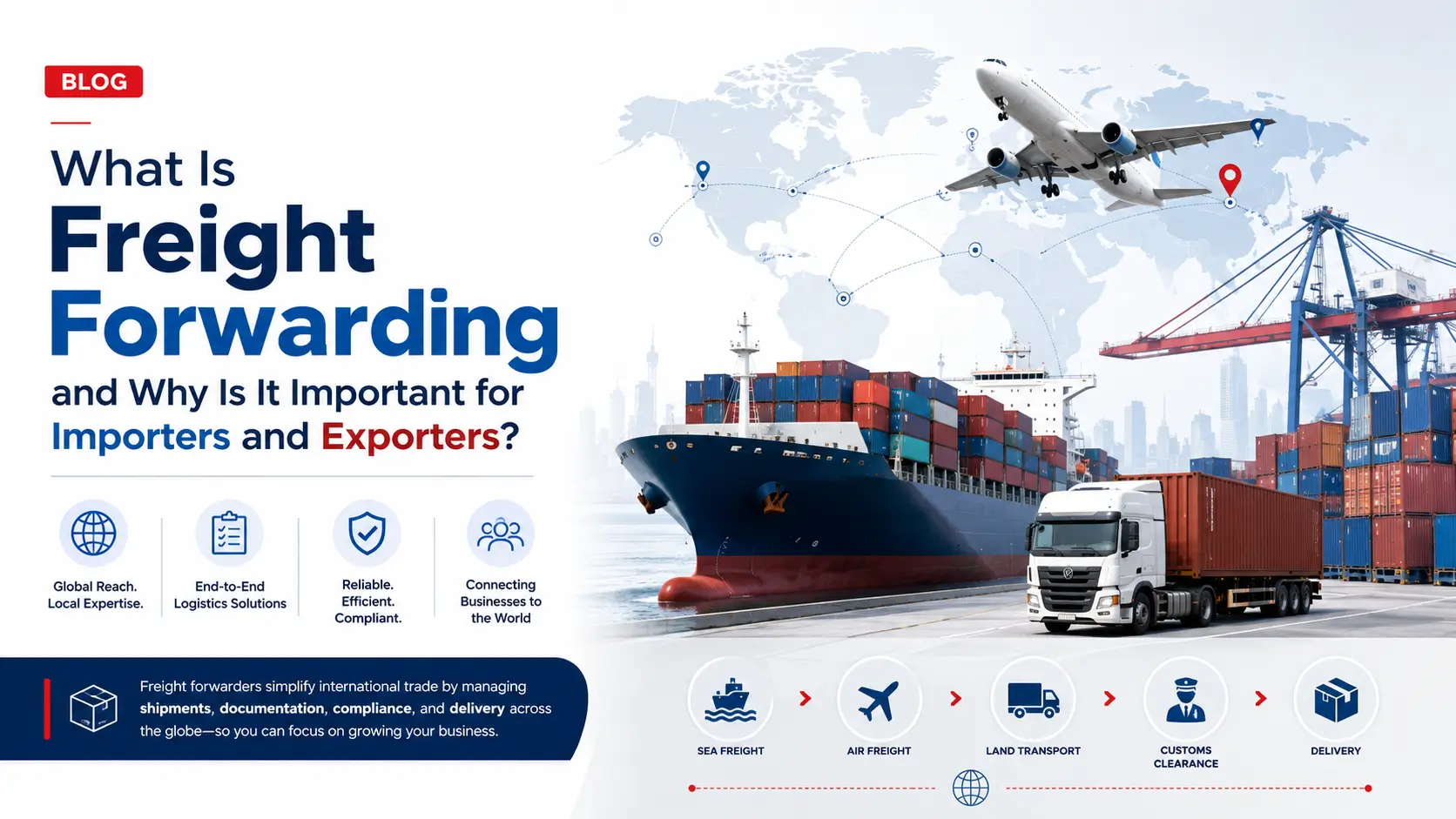
What Is Freight Forwarding and Why Is It Important for Importers and Exporters?
Freight forwarding is the process of planning, coordinating, and managing the movement of goods from one location to another through air, ocean, road, rail, or a combination of transport modes. A freight forwarding company acts as a logistics partner between the shipper, carrier, customs authorities, and the final consignee.
For importers, exporters, manufacturers, and trading companies, freight forwarding is not just about moving cargo. It involves documentation, carrier coordination, route planning, shipment tracking, customs support, cargo handling, and final delivery.
A professional freight forwarder helps businesses move goods efficiently while reducing delays, confusion, and operational risks.
Why Freight Forwarding Matters for Businesses
International cargo movement involves many steps. A shipment may need pickup from a factory, movement to a port or airport, export documentation, customs clearance, carrier booking, destination handling, import clearance, and final delivery.
Without proper coordination, even a small documentation error or route delay can impact delivery timelines and business commitments.
Freight forwarding services help businesses manage this complexity with a single-window solution. Instead of coordinating with multiple parties separately, companies can rely on one logistics partner to manage the entire cargo movement process.
Key Functions of a Freight Forwarder
1. Shipment Planning
A freight forwarder helps choose the right mode of transport based on cargo type, urgency, volume, cost, and destination. For urgent shipments, air freight may be the best option, while ocean freight is often more cost-effective for larger cargo volumes.
2. Carrier Coordination
Freight forwarders coordinate with airlines, shipping lines, transporters, and logistics agents to ensure smooth cargo movement. They also help businesses compare transportation options based on transit time and shipping costs.
3. Documentation Support
Import and export shipments require accurate documentation, including:
- Commercial Invoice
- Packing List
- Bill of Lading (B/L)
- Air Waybill (AWB)
- Certificates of Origin
- Customs Documentation
A freight forwarder ensures all documents are prepared correctly to minimize delays.
4. Customs Coordination
Many freight forwarding companies also assist with customs clearance by supporting documentation and coordinating with customs-related processes to help shipments move smoothly.
5. Door-to-Door Cargo Movement
Freight forwarding services often include complete logistics management from supplier pickup to final delivery, including port or airport handling, customs coordination, and transportation to the consignee.
Types of Freight Forwarding Services
Air Freight Forwarding
Ideal for urgent, high-value, or time-sensitive shipments that require faster delivery.
Ocean Freight Forwarding
Suitable for bulk cargo, containerized shipments, Full Container Load (FCL), Less than Container Load (LCL), and cost-effective international shipping.
LCL Freight Services
Less than Container Load (LCL) shipping is used when cargo volume is not sufficient to fill an entire container, allowing businesses to share container space.
FCL Freight Services
Full Container Load (FCL) shipping is ideal for businesses shipping enough cargo to utilize an entire container.
Multimodal Transportation
This method combines two or more transport modes—such as air, sea, road, and rail—to optimize cargo movement and delivery efficiency.
Freight Consolidation
Freight consolidation combines multiple smaller shipments into one larger shipment, helping businesses optimize transportation costs.
Benefits of Working with a Freight Forwarding Company
A professional freight forwarding company provides several advantages, including:
- Better shipment planning
- Reliable cargo coordination
- Reduced operational complexity
- Documentation support
- Carrier and route guidance
- Customs coordination
- End-to-end shipment visibility
- Improved time and cost efficiency
For businesses engaged in regular import and export activities, a freight forwarder becomes a valuable long-term logistics partner.
Freight Forwarding for Importers and Exporters
Importers require seamless coordination from the supplier’s location to the final destination, while exporters need dependable cargo movement from India to global markets.
Freight forwarding services help businesses minimize shipment delays, documentation errors, and communication gaps throughout the supply chain.
A freight forwarder also helps determine the most suitable transportation method based on delivery timelines, cargo volume, destination, and budget.
Conclusion
Freight forwarding plays a vital role in international trade by connecting businesses with carriers, customs authorities, documentation systems, and delivery networks.
For importers, exporters, manufacturers, and trading companies, partnering with a reliable freight forwarding company simplifies global logistics, improves shipment visibility, and supports efficient cargo movement from origin to destination.