
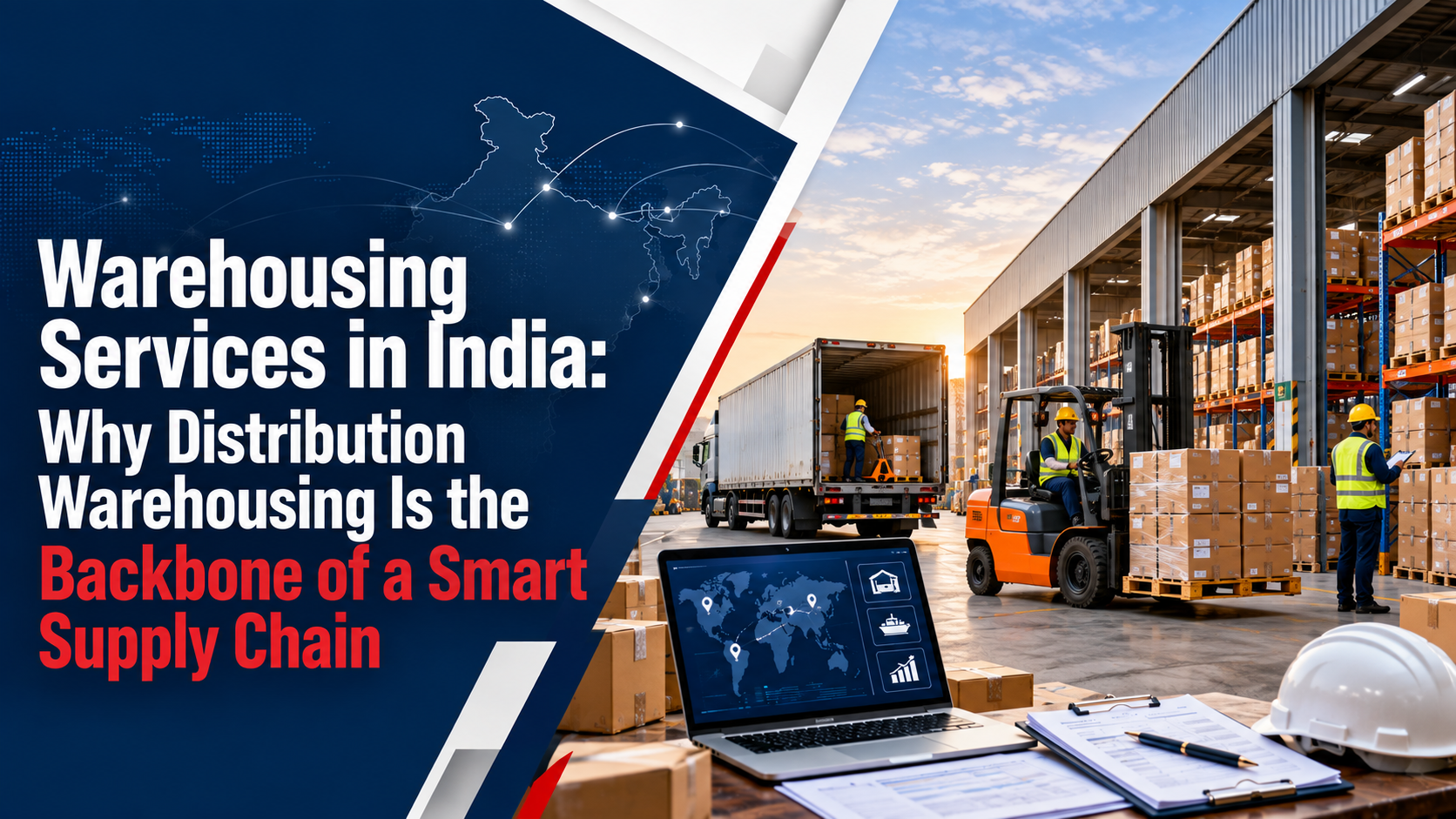
Storage used to be the least glamorous part of the supply chain — a place goods sat between production and delivery. That’s no longer true. Today, warehousing services are one of the biggest levers businesses have for cutting costs, speeding up fulfillment, and keeping customers happy. As India’s e-commerce market grows and manufacturing expands under initiatives like “Make in India,” demand for smart, well-located, technology-enabled warehousing has never been higher.
If you’re evaluating distribution warehousing options for your business, this guide breaks down what modern warehousing actually involves, why it matters more than ever, and how Transzone India helps businesses turn storage into a genuine competitive advantage.
What Are Warehousing Services?
Warehousing services cover the storage, handling, and management of goods between the point of production and the point of sale or delivery. But a modern warehouse does far more than hold inventory on a shelf. A full-service warehousing provider typically offers:
Inventory storage and management – organized, trackable storage with accurate stock counts
Receiving and put-away – unloading, inspecting, and shelving incoming goods
Order picking and packing – preparing shipments accurately and efficiently
Distribution and dispatch – coordinating outbound shipments to retailers, customers, or other warehouses
Inventory tracking technology – Warehouse Management Systems (WMS) that give real-time visibility into stock levels
Value-added services – labeling, kitting, quality checks, and sometimes light assembly or repackaging
Businesses that don’t want to build and manage their own facilities increasingly turn to third-party providers for these services — which is exactly where distribution warehousing comes in.
What Is Distribution Warehousing, and How Is It Different from Basic Storage?
Distribution warehousing is warehousing built specifically around the flow of goods — not just holding inventory, but actively moving it toward its next destination as efficiently as possible. Instead of treating a warehouse as a static storage box, a distribution-focused warehouse is designed around throughput: how quickly and accurately goods can be received, stored, picked, and shipped back out.
This distinction matters because businesses with high order volumes — e-commerce brands, FMCG companies, retailers with multiple outlets — need a warehouse that behaves less like a storage locker and more like a hub. A well-run distribution warehouse reduces the time goods sit idle, which directly reduces holding costs and speeds up delivery timelines.
Why Warehousing Has Become a Strategic Priority for Indian Businesses
Several shifts in the Indian market have pushed warehousing from an operational afterthought to a strategic priority:
E-commerce growth – Faster delivery expectations mean inventory needs to sit closer to end customers, not just in one central facility
GST and tax reform – The shift to a unified tax structure has allowed businesses to consolidate warehouses into fewer, larger, more efficient hubs instead of maintaining state-specific facilities purely for tax reasons
Rising real estate and infrastructure investment – Grade-A warehousing hubs near major highways, ports, and industrial corridors have expanded warehousing options significantly
Omnichannel retail – Businesses selling across online and offline channels need warehousing that can support both models without duplicating inventory
Growing middle-class consumption – Higher demand for diverse goods requires more responsive, scalable storage and distribution networks
Businesses that treat warehousing as a strategic function — rather than a cost center to minimize — consistently see better delivery performance and lower total logistics costs.
What to Look for in a Warehousing Services Provider
Not every warehousing provider operates at the same level. Before signing a contract, it’s worth evaluating a few key factors:
Location and Network
Where a warehouse sits matters as much as what happens inside it. Proximity to transportation hubs, major highways, and your customer base directly affects delivery speed and cost. A provider with warehouses in multiple strategic locations gives businesses more flexibility to store inventory closer to demand.
Technology and Inventory Visibility
A modern Warehouse Management System (WMS) is no longer optional. Businesses need real-time visibility into stock levels, order status, and inventory movement — not end-of-day reports or manual reconciliation.
Scalability
Demand isn’t constant. A good warehousing partner should be able to flex capacity up during peak seasons (like festive sales) and scale back down without forcing businesses into rigid, long-term space commitments they don’t need year-round.
Security and Handling Standards
Goods should be protected from damage, theft, and environmental factors like heat, moisture, and pests. This includes proper racking systems, trained handling staff, and quality control checks at receiving and dispatch.
Integration Capabilities
Warehousing shouldn’t operate in a silo. The ability to integrate with order management systems, e-commerce platforms, and transportation providers reduces manual work and errors across the supply chain.
Value-Added Services
Depending on the business, additional services like labeling, kitting, quality inspection, and returns processing can significantly reduce the operational burden on an internal team.
How Transzone India Approaches Warehousing and Distribution
Transzone India builds warehousing and distribution solutions around the realities businesses actually face — inconsistent demand, tight delivery windows, and the need for accurate, real-time inventory data. Here’s what that looks like in practice:
Strategically located facilities – Warehousing positioned to support faster distribution across key regions, reducing transit time between storage and final delivery.
Technology-driven inventory management – Real-time stock visibility so businesses always know exactly what’s on hand, what’s moving, and what needs replenishing.
Scalable storage solutions – Space that flexes with seasonal demand, so businesses aren’t paying for capacity they don’t need during slower periods.
Seamless integration with transportation – Because warehousing and distribution are handled together, goods move from storage to delivery without the delays that come from coordinating between separate vendors.
Careful handling and quality control – Reducing damage and loss rates through trained staff and proper storage protocols.
Support across industries – From FMCG and retail to manufacturing and e-commerce, Transzone India’s warehousing solutions are built to adapt to different product types, storage requirements, and order volumes.
Industries That Rely on Warehousing and Distribution Services
E-commerce and D2C brands needing fast, decentralized fulfillment
FMCG and retail businesses managing high-turnover inventory
Manufacturing companies requiring raw material and finished goods storage
Import-export businesses needing bonded or transit warehousing
Seasonal businesses that need flexible capacity during peak periods
Types of Warehousing Models Businesses Can Choose From
Not all warehousing works the same way, and understanding the different models helps businesses pick the right fit:
Private warehousing – A business owns or leases its own dedicated facility, offering maximum control over storage conditions and processes, but requiring higher upfront investment.
Public warehousing – Shared storage space rented on flexible terms, useful for businesses with seasonal or unpredictable storage needs that don’t want long-term commitments.
Third-party (3PL) warehousing – A provider like Transzone India manages storage, handling, and distribution on a business’s behalf, combining professional infrastructure with flexible, scalable pricing.
Bonded warehousing – Storage for imported goods before customs duties are paid, commonly used by import-heavy businesses to manage cash flow and compliance.
Distributed fulfillment networks – Multiple smaller warehouses positioned closer to customers, reducing last-mile delivery time and cost compared to a single central facility.
Most growing businesses eventually move toward a 3PL or distributed model, since it offers the flexibility and reach that a single private warehouse often can’t match without significant capital investment.
The Cost of Getting Warehousing Wrong
It’s worth being direct about what happens when warehousing isn’t managed well, because the downstream effects are often bigger than businesses expect:
Stockouts during peak demand lead directly to lost sales and, worse, lost customers who go elsewhere
Poor inventory accuracy results in overselling, order cancellations, and damaged trust with marketplaces or retail partners
Inefficient warehouse layout slows down picking and packing, which cascades into missed shipping cutoffs
Inadequate security or climate control increases damage, spoilage, and shrinkage, quietly eating into margins
Disconnected systems between warehousing and transportation create delays that neither team can fully explain to the customer
None of these issues are usually caused by one bad decision — they’re the accumulated result of treating warehousing as a low-priority function instead of a core part of the supply chain.
Common Mistakes Businesses Make with Warehousing
Choosing a single central warehouse when distributed storage would cut delivery times significantly
Underestimating peak season capacity needs, leading to stockouts or overflow costs
Ignoring technology capabilities, resulting in poor inventory accuracy and manual errors
Not accounting for handling and damage rates when comparing providers on price alone
Overlooking integration requirements, which creates disconnected systems and duplicate data entry
Avoiding these pitfalls starts with treating warehousing as a strategic decision rather than a line-item cost to minimize.
Frequently Asked Questions
- What is the difference between warehousing and distribution?
Warehousing refers to the storage and management of goods, while distribution refers to the process of moving those goods to their next destination — a retailer, customer, or another facility. Distribution warehousing combines both functions, focusing on efficient storage that supports fast, reliable outbound movement.
- What services do warehousing companies in India typically offer?
Most full-service warehousing providers offer inventory storage, receiving and put-away, order picking and packing, dispatch coordination, and real-time inventory tracking. Many also offer value-added services like labeling, kitting, and quality inspection.
- Why is warehousing important for e-commerce businesses?
E-commerce businesses depend on fast, accurate order fulfillment. Well-located warehousing reduces delivery times, while proper inventory management prevents stockouts and overselling — both of which directly affect customer satisfaction.
- How has GST changed warehousing strategy in India?
Before GST, many businesses maintained warehouses in each state largely for tax purposes. Since the introduction of a unified tax system, businesses have been able to consolidate into fewer, larger, more strategically located warehouses, improving efficiency and reducing costs.
- What is a Warehouse Management System (WMS), and why does it matter?
A WMS is software that tracks inventory movement, stock levels, and order status in real time. It reduces manual errors, improves accuracy, and gives businesses the visibility needed to make faster, better-informed decisions about stock and fulfillment.
- Can warehousing services scale up during peak seasons like festive sales?
Yes, a good warehousing provider should be able to offer flexible capacity that scales up during high-demand periods and scales back down afterward, so businesses aren’t locked into paying for unused space year-round.
- What industries use distribution warehousing the most?
E-commerce, FMCG, retail, manufacturing, and import-export businesses are among the heaviest users of distribution warehousing, though any business with physical inventory can benefit from a well-run warehousing and distribution setup.
- How do I choose the right warehousing partner for my business?
Evaluate location and network coverage, technology capabilities, scalability, security and handling standards, integration options, and any value-added services offered. Providers that combine warehousing with transportation, like Transzone India, can also simplify coordination across the supply chain.
- What is the cost of warehousing services in India?
Costs vary based on storage space required, location, handling volume, and any additional services like packaging or kitting. Businesses should look for transparent pricing structures that clearly outline storage fees, handling charges, and any seasonal or volume-based adjustments.
- Can small businesses use professional warehousing services, or is it only for large companies?
Warehousing services are increasingly accessible to businesses of all sizes. Many providers offer scalable, pay-as-you-grow storage solutions, allowing small and medium businesses to access professional-grade warehousing without the capital investment of building their own facility.
Final Thoughts
Warehousing is no longer just about keeping goods safe until they’re needed — it’s a strategic function that directly shapes delivery speed, cost efficiency, and customer experience. Whether you need centralized storage, distributed fulfillment hubs, or a warehousing partner that integrates seamlessly with transportation, distribution warehousing done well can transform how a business operates.
Transzone India combines strategically located facilities, technology-driven inventory management, and scalable storage solutions to help businesses turn warehousing into a genuine advantage rather than a bottleneck. Explore Transzone India’s warehousing services to see how a smarter storage and distribution strategy can support your business as it grows.