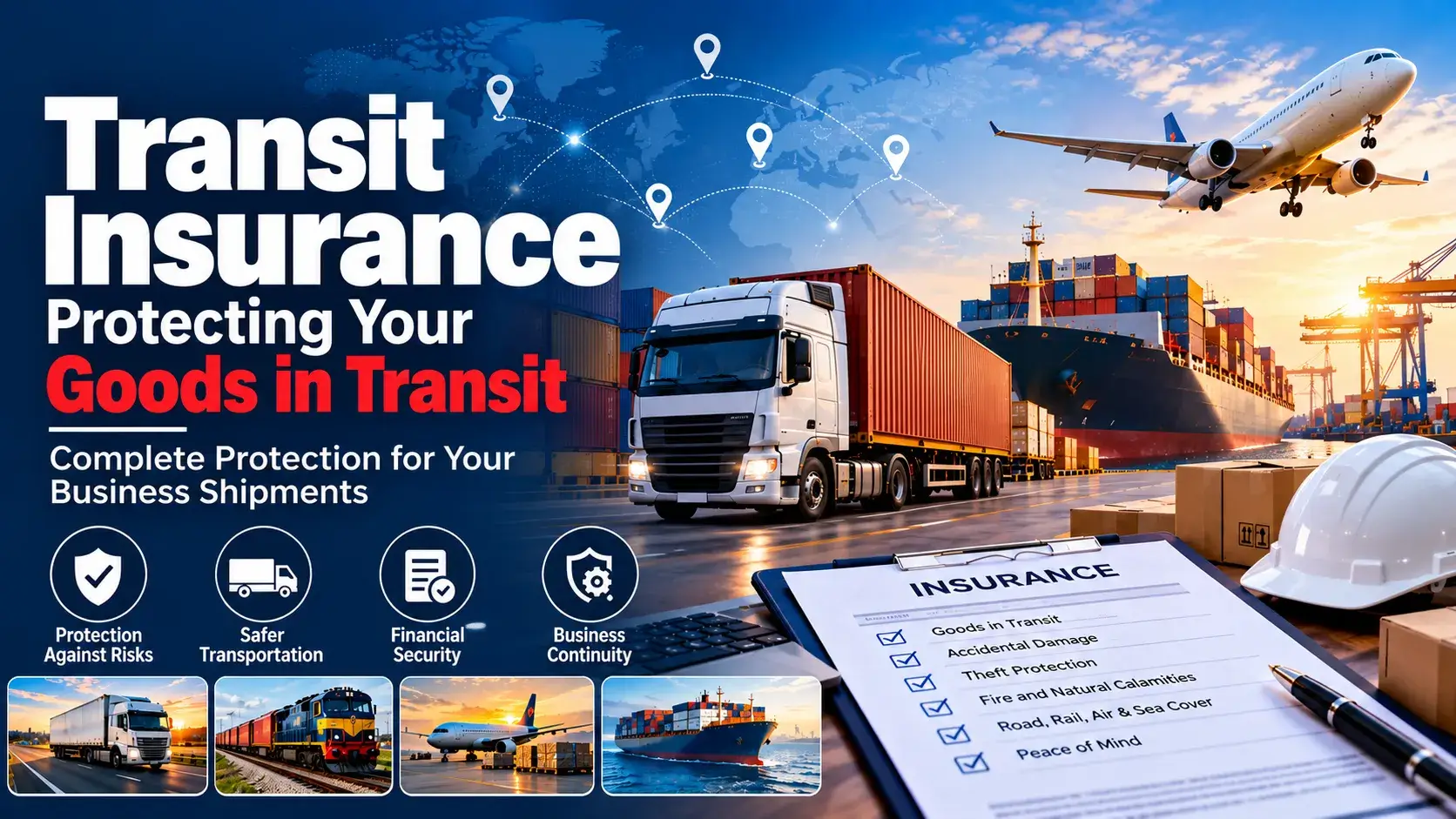
Transportation plays an important role in the smooth functioning of businesses. Every day, thousands of companies transport raw materials, finished products, machinery, electronic equipment and other valuable goods from one location to another. While road, rail, air and sea transportation help businesses deliver products across different locations, the movement of goods also involves certain risks. Accidents, theft, fire, natural disasters and unexpected delays can result in financial losses.
This is where transit insurance becomes important. It provides financial protection against covered risks that may occur while goods are being transported from one place to another. For manufacturers, exporters, importers, distributors and logistics companies, having the right insurance coverage can help reduce the financial impact of unexpected transportation incidents.
Goods in transit insurance is particularly useful for businesses that regularly move products between warehouses, factories, suppliers and customers. It helps protect the value of transported goods and supports better risk management throughout the supply chain.
In this blog, we will discuss what transit insurance is, how it works, its benefits, different types of coverage and why businesses should consider it when planning their transportation requirements.
What Is Transit Insurance?
Transit insurance is a type of insurance policy that provides financial protection against the loss of or damage to goods while they are being transported from one location to another. The coverage generally begins when the insured goods are dispatched and continues during the agreed transportation period, subject to the policy terms and conditions.
Businesses use transit insurance to protect valuable shipments against unexpected events that could affect their products during transportation. Depending on the selected policy, coverage may include road, rail, air or sea transportation.
For example, consider a manufacturing company sending electronic products from its factory to a distributor in another state. During transportation, the vehicle may meet with an accident, resulting in damage to the shipment. If the incident falls within the policy coverage, transit insurance may help the business recover the insured financial loss.
The exact coverage depends on the insurance provider, policy wording, declared value of goods and selected protection.
What Is Goods in Transit Insurance?
Goods in transit insurance is a form of transportation insurance designed to protect commercial goods while they are being moved between locations. It is particularly relevant for businesses that regularly transport products through logistics partners, transport operators or their own delivery networks.
The policy can cover goods against specified risks during transportation, depending on the coverage selected.
For instance, a wholesaler transporting a large quantity of packaged food products to different retailers may face risks such as vehicle accidents, theft or damage caused by certain external events. Goods in transit insurance can help protect the financial value of the shipment against covered incidents.
Businesses dealing with high-value products, fragile items, industrial equipment and bulk shipments can benefit from evaluating suitable goods in transit insurance options.
Why Is Transit Insurance Important for Businesses?
Transportation involves several stages, and goods may pass through different vehicles, warehouses, handling points and distribution centres before reaching their final destination. Each stage can introduce potential risks.
Here are some important reasons why businesses should consider transit insurance.
1. Protection Against Unexpected Financial Losses
One of the biggest benefits of transit insurance is financial protection against covered losses during transportation. If goods are damaged or lost due to an insured event, the policy may compensate the business according to its terms.
Without suitable insurance, businesses may have to bear the entire financial burden themselves.
2. Protection During Long-Distance Transportation
Businesses transporting goods between cities, states or countries often face longer transportation periods. Longer journeys may involve multiple handling operations, changing weather conditions and different transportation routes.
Goods in transit insurance can provide protection during the agreed journey, helping businesses manage transportation-related risks.
3. Better Supply Chain Risk Management
A reliable supply chain depends on the timely and safe movement of products. Unexpected damage or loss can affect inventory availability, delivery schedules and customer relationships.
Transit insurance helps businesses manage one important part of supply chain risk by providing financial protection against covered transportation incidents.
4. Supports Business Continuity
A major shipment loss can affect business operations, especially when the goods contain essential raw materials or products required to fulfil customer orders.
Having appropriate insurance coverage can reduce the financial impact of such incidents and help businesses maintain operational stability.
5. Increased Confidence in Transportation Operations
When businesses have suitable insurance arrangements, they can manage transportation activities with greater financial confidence. This is particularly useful for companies handling expensive machinery, bulk shipments, industrial materials and products that require careful transportation.
What Does Goods in Transit Insurance Cover?
The coverage offered under a goods in transit insurance policy depends on the insurer and the selected plan. However, some commonly available coverage areas include:
1. Accidental Damage: Financial protection may be available when goods are damaged due to an insured transportation accident.
2. Theft and Pilferage: Certain policies provide coverage for theft or pilferage of goods during the insured journey, subject to policy conditions and security requirements.
3. Fire-Related Losses: Coverage may apply to damage or loss caused by fire during transportation, depending on the selected policy.
4. Natural Calamities: Some policies cover losses resulting from specified natural events, such as floods, storms or other weather-related incidents.
5. Vehicle Accidents: Damage caused by road accidents, collisions or overturning of transportation vehicles may be covered under applicable policy conditions.
6. Loading and Unloading Risks: Certain insurance plans may extend protection to goods during loading and unloading activities when these risks are specifically included.
Businesses should carefully review the policy wording to understand the coverage limits, exclusions, deductibles and conditions before purchasing insurance.
Different Types of Transit Insurance
Transit insurance can be selected according to the transportation method, shipment requirements and nature of the goods. Some common types include:
1. Road Transit Insurance
Road transit insurance protects goods transported through trucks, vans and other road vehicles. It is widely relevant for businesses involved in domestic transportation and distribution.
Manufacturers, wholesalers and retailers can consider this coverage when moving products between factories, warehouses and customer locations.
2. Rail Transit Insurance
Rail transit insurance is relevant for businesses transporting goods through railway networks. It can help protect shipments against covered risks during railway transportation.
It is particularly useful for companies transporting bulk materials, industrial products and large quantities of commercial goods.
3. Air Transit Insurance
Air transit insurance is suitable for businesses that transport high-value or time-sensitive shipments through air cargo services.
Electronic products, medical equipment, specialised components and other valuable goods may require suitable protection during air transportation.
4. Marine Transit Insurance
Marine transit insurance provides protection for goods transported through sea routes. It is particularly important for importers and exporters involved in international trade.
Depending on the selected policy, coverage may extend to specified risks during the sea journey and associated transportation stages.
5. Multimodal Transit Insurance
Some shipments require more than one mode of transportation. For example, goods may travel by truck to a port, by ship to another country and then by road to their final destination.
Multimodal transit insurance can provide coverage across multiple transportation modes under an agreed policy structure.
Who Should Consider Goods in Transit Insurance?
Goods in transit insurance can be useful for businesses across several industries. Some of the major sectors that may benefit include:
- Manufacturing Companies: Businesses transporting raw materials, machinery, components and finished products.
- Logistics and Transportation Companies: Companies managing shipments and commercial goods movement.
- Importers and Exporters: Businesses involved in domestic and international product transportation.
- Wholesale Distributors: Companies delivering bulk products to retailers and other business customers.
- E-commerce Businesses: Businesses transporting customer orders through delivery networks.
- Retail Businesses: Companies moving inventory between warehouses, distribution centres and retail outlets.
- Industrial Suppliers: Businesses transporting heavy equipment, construction materials and specialised products.
Any business that regularly moves valuable goods should evaluate its transportation risks and determine whether suitable transit insurance is required.
Factors to Consider Before Choosing Transit Insurance
Selecting the right transit insurance policy requires an understanding of the goods being transported, the transportation method and the possible risks involved.
Here are some important factors businesses should consider.
1. Nature and Value of Goods
The type and value of goods play an important role in determining suitable insurance coverage. Fragile products, electronic equipment, machinery and perishable items may require specific coverage conditions.
Businesses should accurately declare the value of their shipments while selecting a policy.
2. Transportation Method
The risks associated with road, rail, air and sea transportation can differ. Businesses should select coverage that matches their actual transportation requirements.
3. Distance and Transportation Route
Long-distance transportation may involve multiple transit points, handling operations and different environmental conditions. Understanding the route can help businesses identify potential risks.
4. Policy Coverage and Exclusions
Before purchasing goods in transit insurance, businesses should carefully review the policy inclusions and exclusions.
Certain policies may exclude losses arising from inadequate packaging, inherent defects, ordinary leakage, delays or specific circumstances unless additional coverage is available.
5. Claim Settlement Process
Businesses should understand the claim notification requirements, supporting documents, assessment procedures and applicable deadlines.
A clear understanding of the claims process can help avoid unnecessary complications when an insured incident occurs.
6. Insurance Premium and Deductibles
The premium may depend on factors such as the value of goods, type of products, transportation route, mode of transit, selected coverage and previous claims experience.
Businesses should compare coverage and policy conditions rather than choosing insurance based only on the lowest premium.
How Does the Transit Insurance Process Work?
The process of obtaining and using transit insurance generally involves a few important steps.
Step 1: Identify Transportation Requirements
The business identifies the goods to be transported, their value, the origin, destination and transportation method.
Step 2: Select Suitable Coverage
Based on the shipment requirements, the business evaluates available insurance options and selects appropriate coverage.
Step 3: Declare Shipment Details
Accurate information about the goods, declared value, transportation route and other required details is provided to the insurer.
Step 4: Policy Issuance
After the proposal is reviewed and accepted, the insurer issues the applicable insurance policy or certificate.
Step 5: Transportation of Goods
The goods are transported according to the agreed journey and policy conditions.
Step 6: Claim Reporting
If an insured loss or damage occurs, the policyholder must notify the insurer within the prescribed timeframe and provide the necessary documents and evidence.
The insurer then assesses the claim according to the policy terms and applicable procedures.
Documents Required for Transit Insurance Claims
When a shipment is damaged or lost during transportation, businesses may need to provide supporting documents to process their claims.
Commonly requested documents include:
- Copy of the transit insurance policy or certificate.
- Commercial invoice showing the value of goods.
- Transport receipt, consignment note or lorry receipt.
- Delivery challan or relevant shipment documents.
- Photographs or other evidence of damaged goods.
- Survey report, where applicable.
- Police report or FIR in cases involving theft or accidents, where required.
- Claim form and supporting correspondence.
The exact documentation requirements may vary depending on the nature of the incident and the insurer’s claim procedures.
Common Mistakes to Avoid When Purchasing Goods in Transit Insurance
Businesses sometimes overlook important details while selecting insurance coverage. Avoiding these mistakes can help improve transportation risk management.
- Underinsuring Goods: Declaring a value lower than the actual insurable value may affect claim settlement.
- Ignoring Policy Exclusions: Not understanding exclusions can lead to unexpected claim disputes.
- Incorrect Shipment Details: Providing inaccurate information about goods, routes or transportation methods can create complications.
- Overlooking Packaging Requirements: Improper packaging may affect coverage when the policy excludes losses arising from inadequate packing.
- Delaying Claim Notification: Not reporting an incident within the required timeframe can affect the claim process.
- Choosing Only on Premium: A low premium does not necessarily mean the policy provides adequate protection.
Reviewing these details before transportation can help businesses make more informed insurance decisions.
Why Businesses Should Plan Transit Insurance Alongside Logistics Operations
Transportation and insurance are closely connected. While logistics operations focus on moving goods efficiently, insurance helps businesses manage the financial risks associated with that movement.
Companies should consider insurance requirements while planning their transportation strategies instead of treating them as a separate activity.
For businesses managing frequent shipments, maintaining clear records of goods, transportation routes, shipment values and delivery details can make insurance administration easier.
Working with experienced logistics partners and understanding the responsibilities of transport operators can also help improve shipment management.
At Transzoneindia, businesses can consider transportation planning and risk management as important parts of their overall supply chain operations. A well-planned transportation process, supported by suitable goods in transit insurance, can help companies manage shipment-related uncertainties more effectively.
Conclusion
Transportation is an essential part of modern business operations, but moving goods from one location to another involves several risks. Accidents, theft, fire and other unexpected incidents can result in financial losses and disrupt supply chain activities.
Transit insurance provides businesses with financial protection against covered transportation-related losses, while goods in transit insurance helps protect commercial shipments during their movement between locations.
Whether a business transports raw materials, finished products, machinery or bulk shipments, selecting suitable insurance coverage can support better financial planning and risk management.
Transzoneindia recognises the importance of efficient transportation and organised logistics operations. Businesses should evaluate their shipment requirements, understand available insurance options and choose appropriate coverage to support safer and more reliable goods movement.