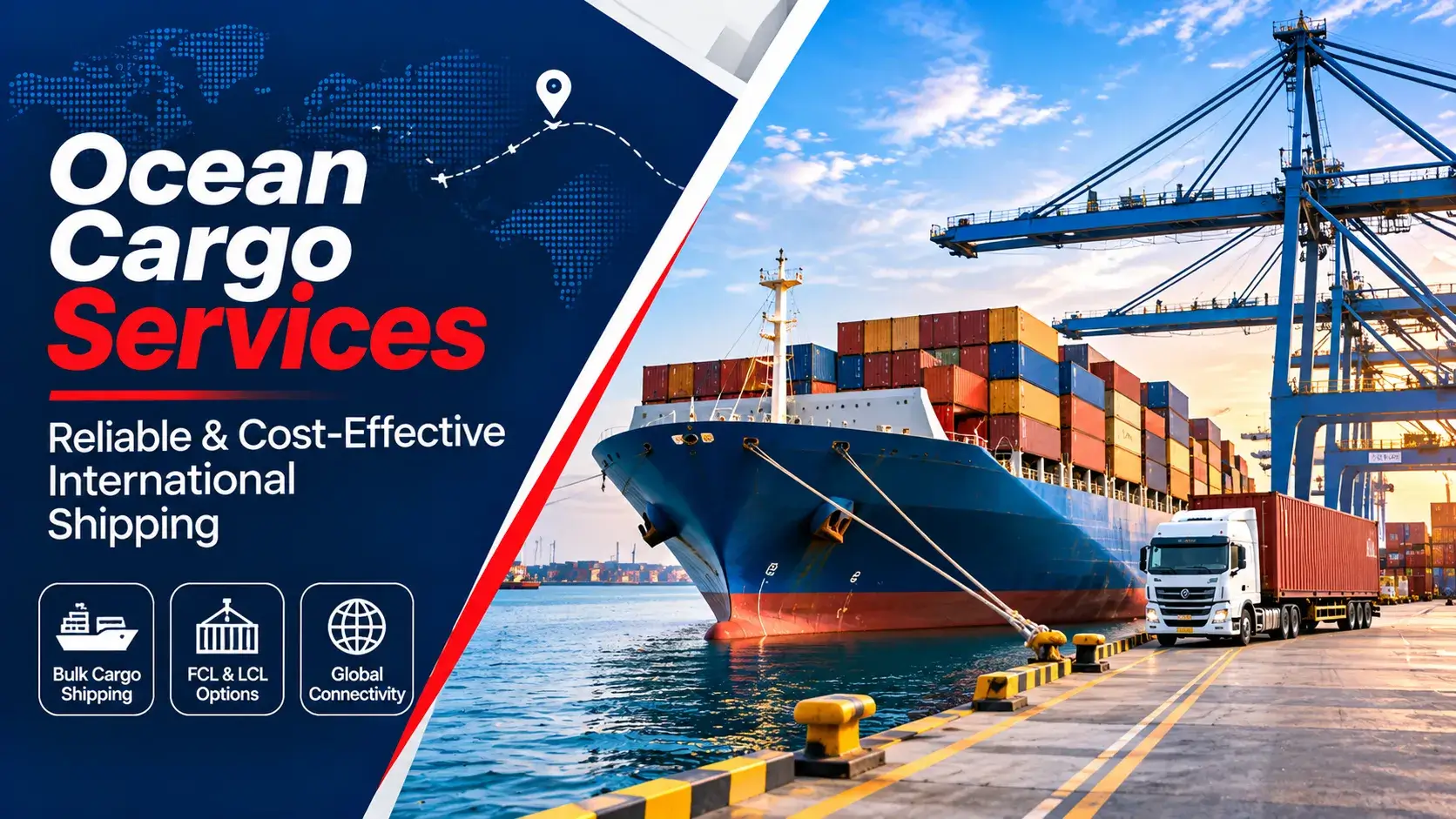
International trade depends on a strong logistics network that allows businesses to transport goods between countries efficiently. From industrial machinery and raw materials to consumer products and commercial shipments, companies require dependable transportation solutions to maintain their supply chains. Among the different transportation methods available, ocean shipping continues to play a major role in global commerce because of its ability to handle large volumes of cargo across international markets.
For businesses involved in imports and exports, ocean cargo services provide an economical transportation option for moving goods over long distances. With established shipping routes, container transportation, and international port connectivity, ocean freight supports industries that depend on regular and large-scale cargo movement.
Professional ocean freight forwarding also plays an important role in coordinating international shipments. It involves managing transportation arrangements, shipping documentation, cargo handling, customs coordination, and other logistics activities associated with moving goods by sea.
Transzoneindia supports businesses with logistics and freight forwarding solutions designed to meet different cargo transportation requirements. With international trade continuing to expand, having suitable ocean transportation arrangements is important for maintaining efficient supply chain operations.
The Growing Importance of Ocean Transportation in Global Trade
Ocean transportation remains one of the most widely used methods for international cargo movement. Businesses across manufacturing, retail, automotive, agriculture, construction, and other industries depend on shipping networks to transport products between global markets.
One of the main reasons for its importance is its ability to accommodate large quantities of cargo. Compared to air transportation, sea shipping is generally more economical for heavy, bulky, and high-volume shipments. This makes it suitable for companies that regularly transport commercial goods, industrial equipment, raw materials, and finished products.
International shipping routes also connect major manufacturing centres, trading hubs, and distribution markets. These connections allow businesses to source materials from overseas suppliers and distribute finished products to customers in different countries.
Reliable ocean cargo services help companies manage these transportation requirements while maintaining better control over shipment planning and logistics expenses.
As businesses expand their international operations, professional ocean freight forwarding becomes increasingly relevant for coordinating shipments across ports, shipping lines, customs authorities, and other logistics stakeholders.
How Ocean Cargo Services Support Different Industries
Different industries have different cargo transportation requirements. While some businesses need to move large quantities of raw materials, others depend on regular shipments of finished products, machinery, or commercial inventory.
Ocean shipping offers the flexibility to accommodate various cargo categories, subject to container availability, carrier acceptance policies, and applicable regulations.
Manufacturing and Industrial Sector
Manufacturing companies regularly import raw materials, industrial components, machinery, and production equipment. These shipments are often large in volume and may require specialised container arrangements. Sea transportation provides an economical option for moving such cargo between international manufacturing locations.
Automotive Industry
The automotive sector depends on the movement of spare parts, vehicle components, tyres, accessories, and manufacturing materials. Reliable cargo transportation helps businesses maintain production schedules and manage inventory across different markets.
Agriculture and Food Industry
Agricultural commodities, packaged food products, and certain processed food items are transported internationally through sea routes. Depending on the nature of the products, businesses may use dry containers or temperature-controlled refrigerated containers.
Retail and Consumer Goods
Retailers and distributors often import furniture, household products, textiles, electronics, and other commercial goods in large quantities. Ocean transportation supports bulk shipments and helps businesses manage international inventory requirements.
Construction and Infrastructure
Construction companies require materials, industrial equipment, machinery parts, and other heavy products for infrastructure projects. Sea freight offers a suitable transportation option for many such shipments.
Across these industries, dependable ocean cargo services help businesses organise international product movement according to their shipment volume, cargo characteristics, and delivery requirements.
The Role of Ocean Freight Forwarding in International Logistics
International sea transportation involves more than simply booking space on a vessel. Multiple activities must be coordinated to ensure that cargo moves between the origin and destination ports according to the required shipping arrangements.
This is where ocean freight forwarding becomes important.
A freight forwarder coordinates with shipping lines, exporters, importers, customs authorities, port operators, and other logistics partners. The objective is to organise the movement of goods while managing the documentation and operational requirements associated with international shipping.
Depending on the shipment arrangement, these activities may include cargo collection, container booking, export documentation, port handling, customs coordination, shipping instructions, and destination delivery arrangements.
Documentation is particularly important in international transportation. Commercial invoices, packing lists, Bills of Lading, shipping instructions, and applicable customs declarations are commonly required. Additional certificates may be necessary depending on the product and destination country.
Professional ocean freight forwarding helps businesses coordinate these requirements and manage the different stages of their international shipments.
For companies handling regular imports and exports, proper coordination can reduce administrative challenges and improve communication between the different parties involved in cargo transportation.
FCL and LCL Shipping for Different Cargo Requirements
Businesses have different shipment volumes, and their transportation arrangements need to reflect these requirements. In ocean freight, Full Container Load (FCL) and Less than Container Load (LCL) are two commonly used shipping options.
Full Container Load (FCL)
FCL shipping involves reserving an entire shipping container for one shipment. It is generally suitable for businesses transporting large quantities of goods that can efficiently utilise the available container capacity.
This arrangement provides dedicated container space and can simplify cargo handling when the shipment volume is sufficient.
Less than Container Load (LCL)
LCL shipping is suitable for businesses that do not require an entire container. In this arrangement, cargo from multiple shippers is consolidated into a shared container.
It allows smaller businesses to transport international shipments without paying for the full container capacity.
The choice between FCL and LCL depends on cargo volume, dimensions, shipment frequency, destination, and overall transportation costs.
Suitable ocean cargo services can help businesses select an appropriate shipping arrangement based on their actual logistics requirements.
Why Businesses Prefer Ocean Freight for Bulk Shipments
Transportation expenses directly affect the overall cost of imported and exported products. For businesses shipping large quantities of goods, selecting an economical transportation method can make a significant difference to supply chain budgets.
Ocean freight is generally more cost-effective than air freight for large-volume and heavy cargo, although actual costs depend on the route, cargo type, shipping conditions, and additional charges.
Another advantage is container capacity. Standard shipping containers allow businesses to transport substantial quantities of products within a single shipment. Specialised containers are also available for certain cargo categories, including refrigerated products and oversized equipment.
Ocean shipping also provides access to extensive international trade routes. This allows businesses to connect with suppliers and customers across different continents through established port networks.
With appropriate ocean freight forwarding, companies can coordinate shipping schedules, documentation, cargo handling, and destination arrangements as part of their wider logistics operations.
For businesses with regular international trade requirements, sea transportation can support long-term supply chain planning and cost management.
Factors Affecting Ocean Freight Shipping Costs
Ocean freight charges vary depending on several operational and shipment-related factors. Understanding these elements helps businesses plan transportation budgets more effectively.
Shipment Volume and Container Type: The cargo quantity, container size, and type of container influence the overall shipping charges. FCL and LCL shipments are priced differently.
Origin and Destination Ports: The distance between ports, available shipping routes, port infrastructure, and carrier schedules can affect transportation expenses.
Cargo Characteristics: Heavy, oversized, hazardous, or temperature-sensitive products may require specialised containers, additional handling, or regulatory approvals.
Fuel and Market Conditions: Fuel prices, vessel capacity, seasonal demand, and international shipping market conditions can influence freight rates.
Port and Handling Charges: Terminal handling, documentation, customs-related expenses, and other port charges may contribute to the overall shipping cost.
Customs Duties and Taxes: Import duties, taxes, and applicable regulatory charges depend on the product classification and destination country’s trade regulations.
Professional ocean freight forwarding helps businesses understand the different cost components associated with their shipments and coordinate suitable transportation arrangements.
Documentation and Customs Coordination in Sea Freight
Documentation plays a significant role in international sea transportation. Exporters and importers must ensure that shipping paperwork is accurate and meets the applicable requirements of the countries involved.
The Bill of Lading is one of the most important documents in ocean shipping. It serves as evidence of the contract of carriage and includes important details about the shipment, shipper, consignee, and destination.
Other commonly required documents include:
- Commercial Invoice
- Packing List
- Bill of Lading
- Certificate of Origin, where applicable
- Shipping Instructions
- Export and Import Customs Declarations
- Product-specific certificates and permits, where required
Customs procedures may involve document verification, cargo examination, duty assessment, and regulatory checks. Requirements differ depending on the goods being transported and the destination country.
Proper documentation and customs coordination are essential for avoiding unnecessary complications during international cargo movement.
Transzoneindia: Supporting International Cargo and Freight Forwarding Requirements
International shipping requires coordination, planning, and a clear understanding of different transportation requirements. Businesses need logistics support that helps them manage cargo movement while addressing documentation, handling, and shipping-related activities.
Transzoneindia provides logistics and freight forwarding support for businesses involved in cargo transportation and international trade.
Whether companies are importing industrial materials, exporting commercial products, transporting machinery, or managing regular bulk shipments, selecting suitable transportation arrangements is important for maintaining supply chain efficiency.
With the right ocean cargo services, businesses can organise large-volume shipments and manage their international transportation requirements according to their operational needs.
Professional ocean freight forwarding also supports coordination between shipping lines, ports, customs authorities, and other logistics partners involved in the movement of goods.
For businesses looking to manage international cargo transportation, Transzoneindia offers logistics support aligned with different shipping requirements.
Connect with Transzoneindia to discuss your international cargo requirements and identify suitable ocean freight transportation arrangements for your business.
Frequently Asked Questions (FAQs)
1. What are ocean cargo services?
Ocean cargo services involve transporting goods between countries through sea routes using commercial cargo vessels. These services support the movement of bulk products, industrial materials, machinery, consumer goods, and other commercial shipments.
2. What is ocean freight forwarding?
Ocean freight forwarding involves coordinating the transportation of goods by sea. It includes shipping arrangements, container booking, cargo handling, documentation, customs coordination, and other activities associated with international ocean shipments.
3. What is the difference between FCL and LCL shipping?
FCL (Full Container Load) involves reserving an entire container for one shipment, whereas LCL (Less than Container Load) involves sharing container space with cargo from multiple shippers. The suitable option depends on shipment volume and transportation requirements.
4. Why is ocean freight suitable for international businesses?
Ocean freight is suitable for businesses that transport large quantities of goods over international routes. It generally offers lower transportation costs per unit for bulk cargo compared to air freight.
5. What documents are required for ocean cargo transportation?
Common documents include a Commercial Invoice, Packing List, Bill of Lading, shipping instructions, and customs declarations. Additional certificates may be required depending on the product and destination.
6. How are ocean freight charges calculated?
Ocean freight charges depend on factors such as shipment volume, container type, origin and destination ports, cargo characteristics, shipping route, and market conditions. Additional charges may include port handling, documentation, customs duties, and local transportation.
7. Can heavy machinery be transported through ocean freight?
Yes. Ocean transportation is commonly used for heavy machinery, industrial equipment, and oversized cargo. Depending on the dimensions and weight, specialised containers or breakbulk shipping arrangements may be required.
8. How long does international ocean shipping take?
Transit time depends on the shipping route, origin and destination ports, vessel schedules, transshipment requirements, and port congestion. Door-to-door delivery may take additional time due to customs clearance and inland transportation.
9. Can small businesses use ocean freight forwarding services?
Yes. Small businesses can use LCL shipping to transport smaller quantities of goods without booking an entire container. This makes international sea transportation accessible to businesses with different shipment volumes.
10. How can businesses select suitable ocean freight services?
Businesses should consider cargo volume, product type, shipping destination, delivery timelines, container requirements, and transportation budget. Working with a freight forwarding provider can help coordinate suitable shipping arrangements.