Air Freight vs Ocean Freight: Which Shipping Mode Is Right for Your Cargo?
When businesses need to move goods internationally, one of the most important decisions is choosing between air freight and ocean freight. Both options are widely used in global logistics, but they serve different purposes.
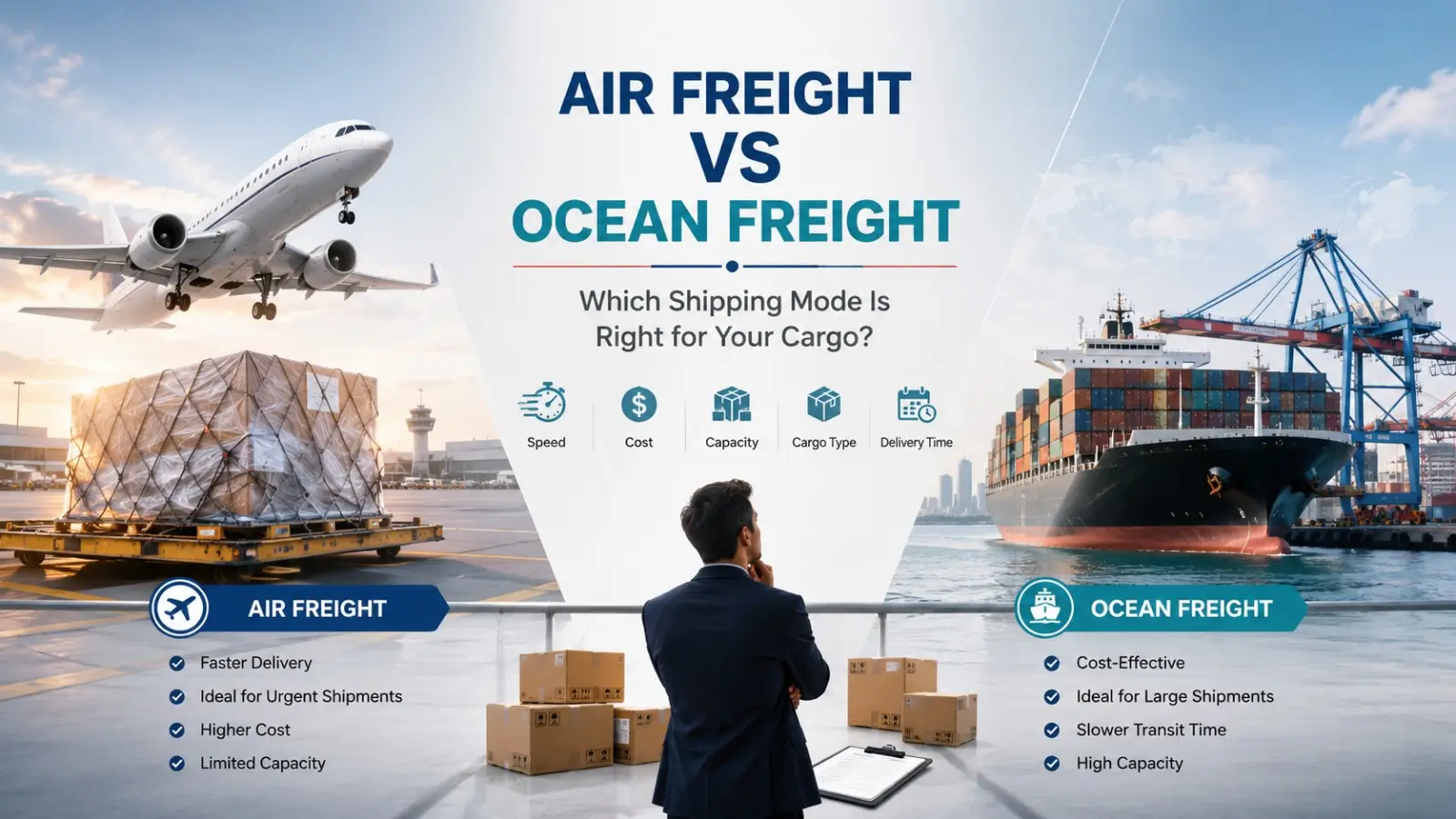
Air freight is faster and suitable for urgent cargo. Ocean freight is more cost-effective and ideal for larger shipments. The right choice depends on cargo type, delivery timeline, budget, destination, and shipment volume.
Understanding the difference between air freight and ocean freight helps importers and exporters plan better and avoid unnecessary delays or costs.
What Is Air Freight?
Air freight is the movement of cargo by aircraft. It is commonly used for urgent, valuable, lightweight, or time-sensitive shipments. Businesses choose air freight when delivery speed is more important than cost.
Air Freight Is Suitable For:
- Urgent business shipments
- High-value goods
- Electronics and sensitive cargo
- Samples and documents
- Medical or critical supplies
- Time-bound export orders
The biggest advantage of air freight is speed. Cargo can move across countries in a much shorter time compared to ocean freight.
What Is Ocean Freight?
Ocean freight is the movement of goods by sea through shipping containers and cargo vessels. It is one of the most widely used methods for global trade because it can handle large cargo volumes at a lower cost.
Ocean Freight Is Suitable For:
- Bulk cargo
- Heavy machinery
- Large-volume shipments
- FCL shipments
- LCL shipments
- Non-urgent cargo
- Commercial import-export goods
Ocean freight may take longer, but it is often more economical for large or heavy shipments.
Air Freight vs Ocean Freight: Key Differences
1. Speed
Air freight is much faster than ocean freight. If the cargo is urgent or delivery has a strict deadline, air freight is usually the better option.
Ocean freight takes longer because it depends on vessel schedules, port handling, customs processes, and inland movement.
2. Cost
Ocean freight is generally more cost-effective for larger shipments. Air freight is faster but usually more expensive, especially for heavy cargo.
For businesses with budget-sensitive shipments, ocean freight is often preferred.
3. Cargo Volume
Air freight is better for smaller, lighter, and high-value shipments. Ocean freight is better for large-volume cargo, heavy goods, and containerized shipments.
4. Reliability
Both air and ocean freight can be reliable when planned properly. However, air freight generally has more predictable transit times, while ocean freight may be affected by port congestion, vessel delays, or schedule changes.
5. Documentation
Both shipping modes require documentation. Air freight uses airway bills, while ocean freight uses bills of lading. Customs documents, invoices, and packing lists are required in both cases.
When Should You Choose Air Freight?
Choose air freight when:
- Cargo is urgent
- Delivery timeline is short
- Shipment is lightweight or high-value
- Delay can affect business operations
- You are shipping samples or critical goods
Air freight is best when speed and reliability matter more than cost.
When Should You Choose Ocean Freight?
Choose ocean freight when:
- Cargo volume is large
- Shipment is heavy
- Delivery timeline is flexible
- Cost control is important
- You need FCL or LCL shipping
- You are importing/exporting commercial goods in bulk
Ocean freight is best when cost efficiency and cargo capacity are priorities.
What About Multimodal Freight?
Sometimes, the best solution is not only air or ocean. Multimodal transportation combines different modes such as sea, road, rail, and air to create a balanced logistics plan.
For example, cargo may move by ocean freight to a port and then by road to the final destination. In some urgent cases, businesses may use sea-air combinations to balance speed and cost.
Role of a Freight Forwarder
A freight forwarder helps businesses choose the right shipping mode based on:
- Cargo type
- Shipment weight and volume
- Urgency
- Destination
- Budget
- Customs requirements
- Delivery expectations
This guidance helps businesses avoid choosing a mode that is either too expensive or too slow for their requirement.
Conclusion
Air freight and ocean freight both play important roles in global logistics. Air freight is best for urgent and time-sensitive cargo, while ocean freight is ideal for large, heavy, and cost-sensitive shipments.
The right choice depends on your business requirement. Working with an experienced freight forwarding company can help you select the best mode and manage your cargo movement more efficiently.